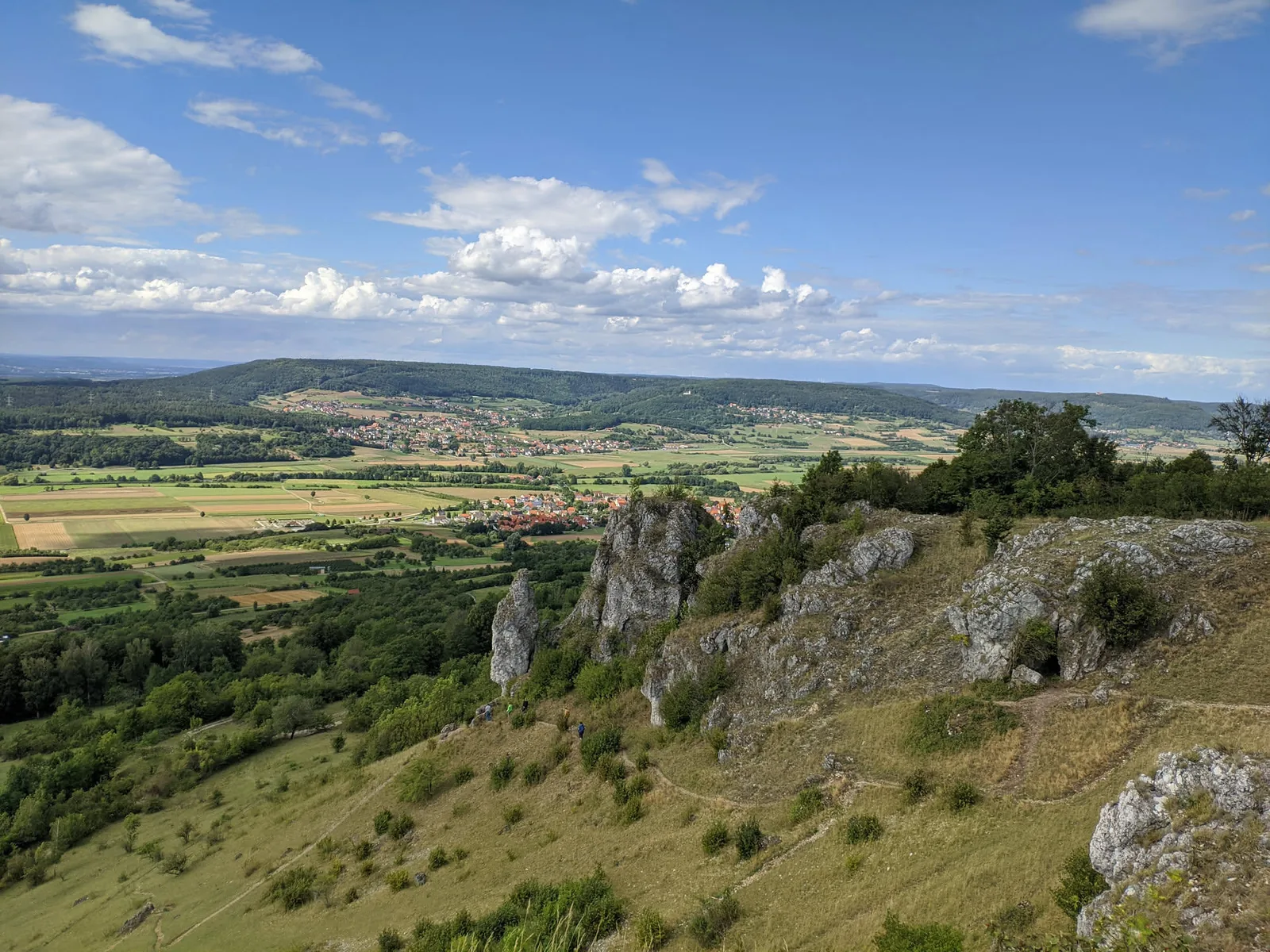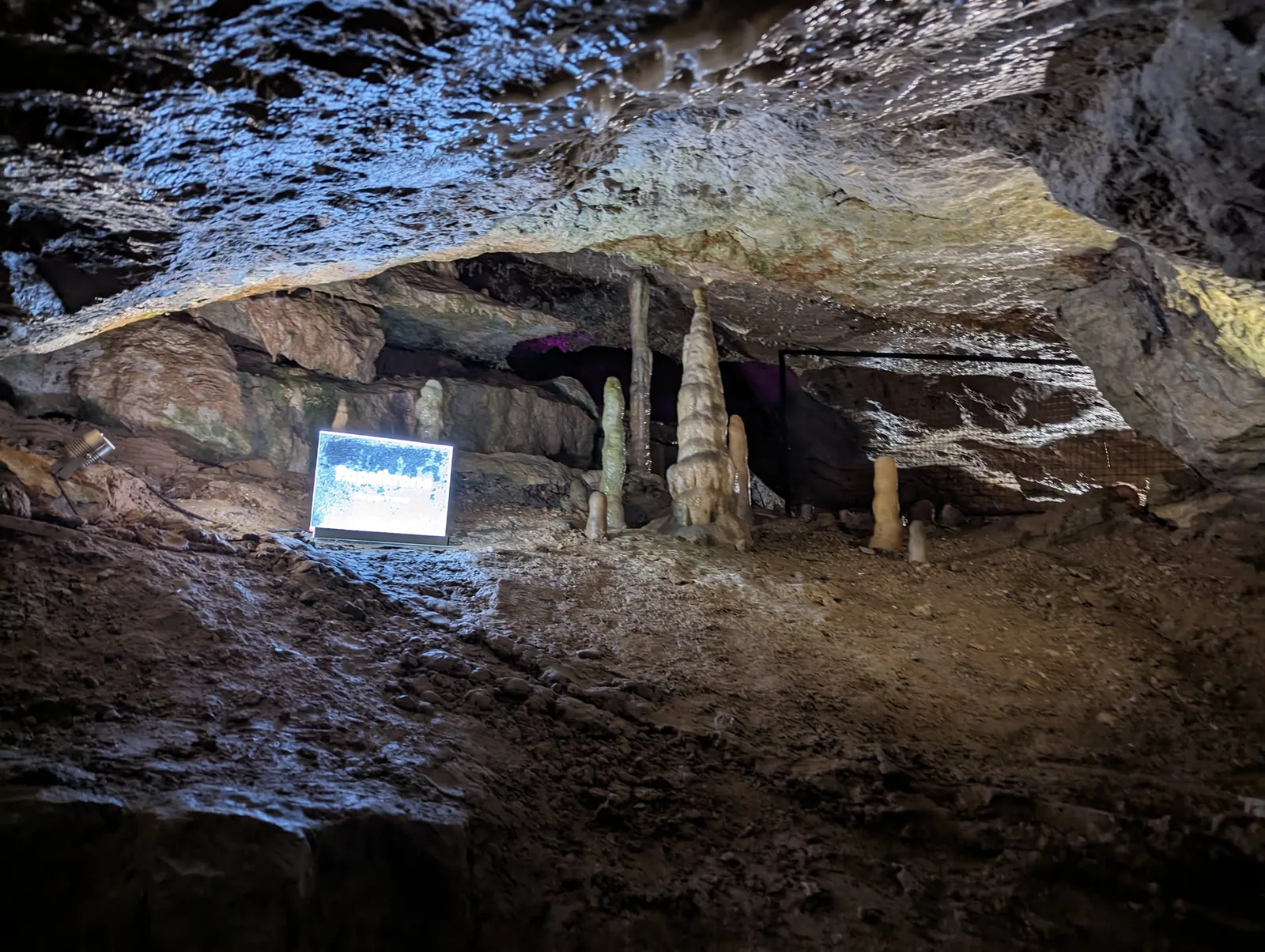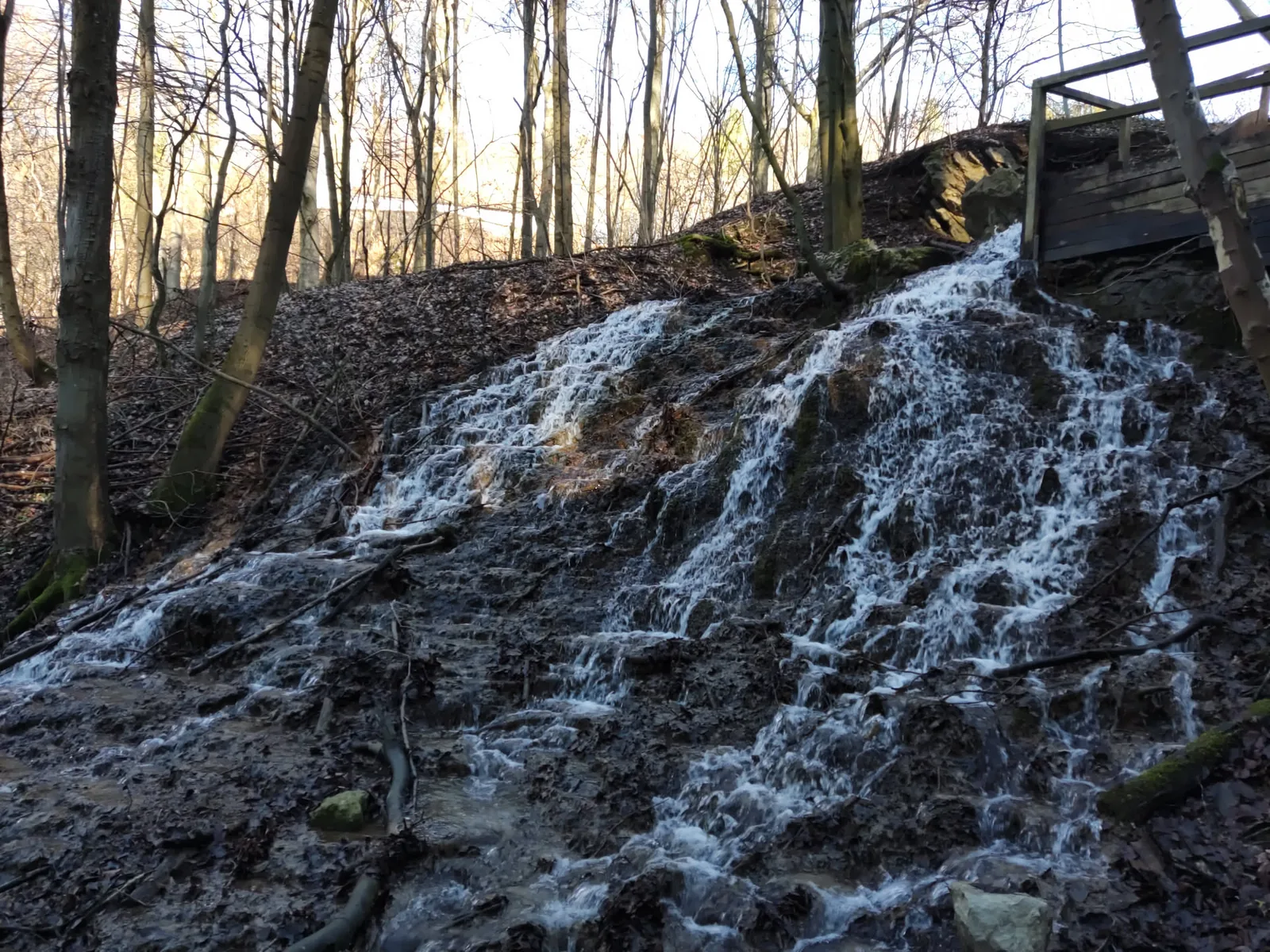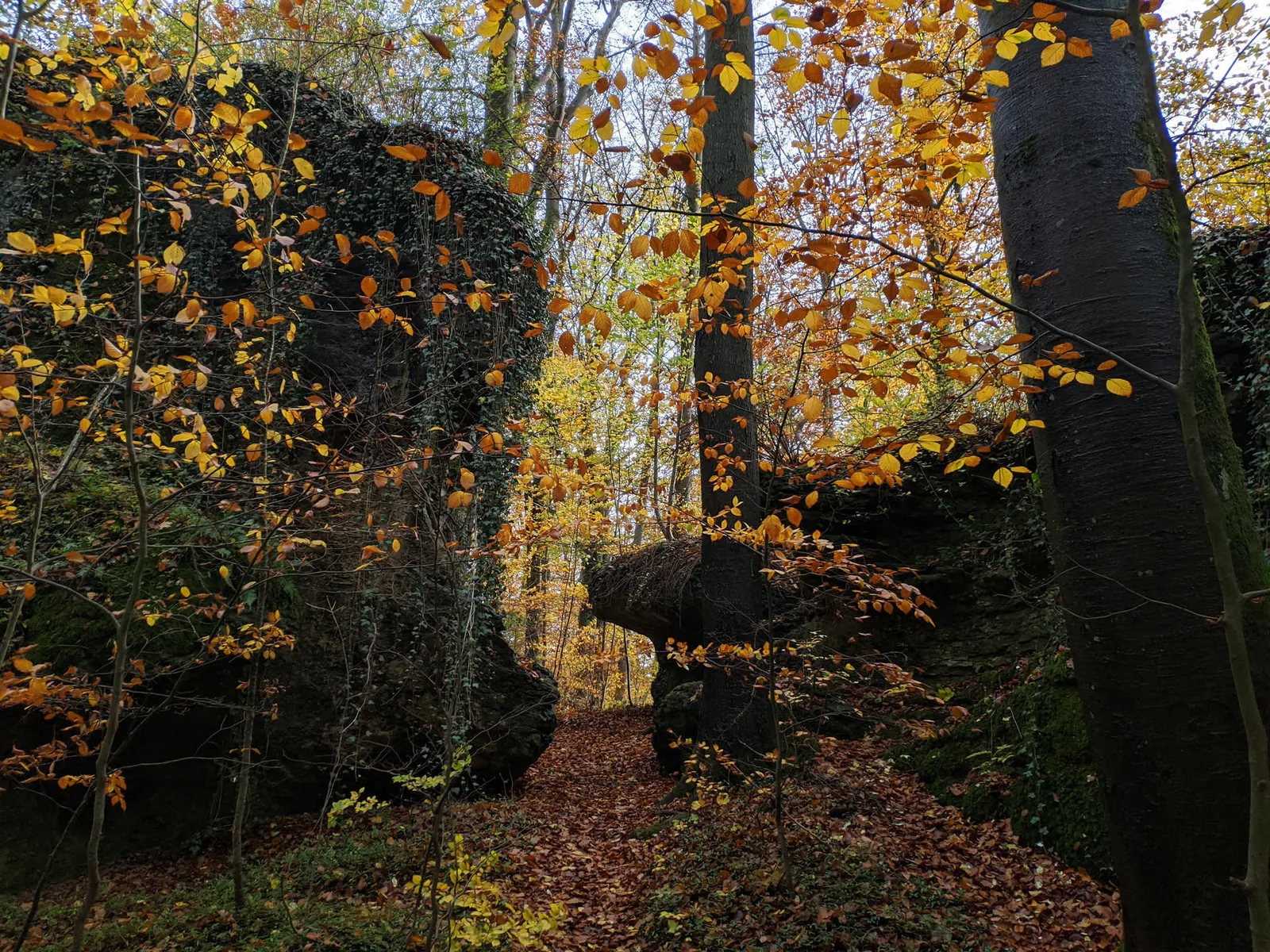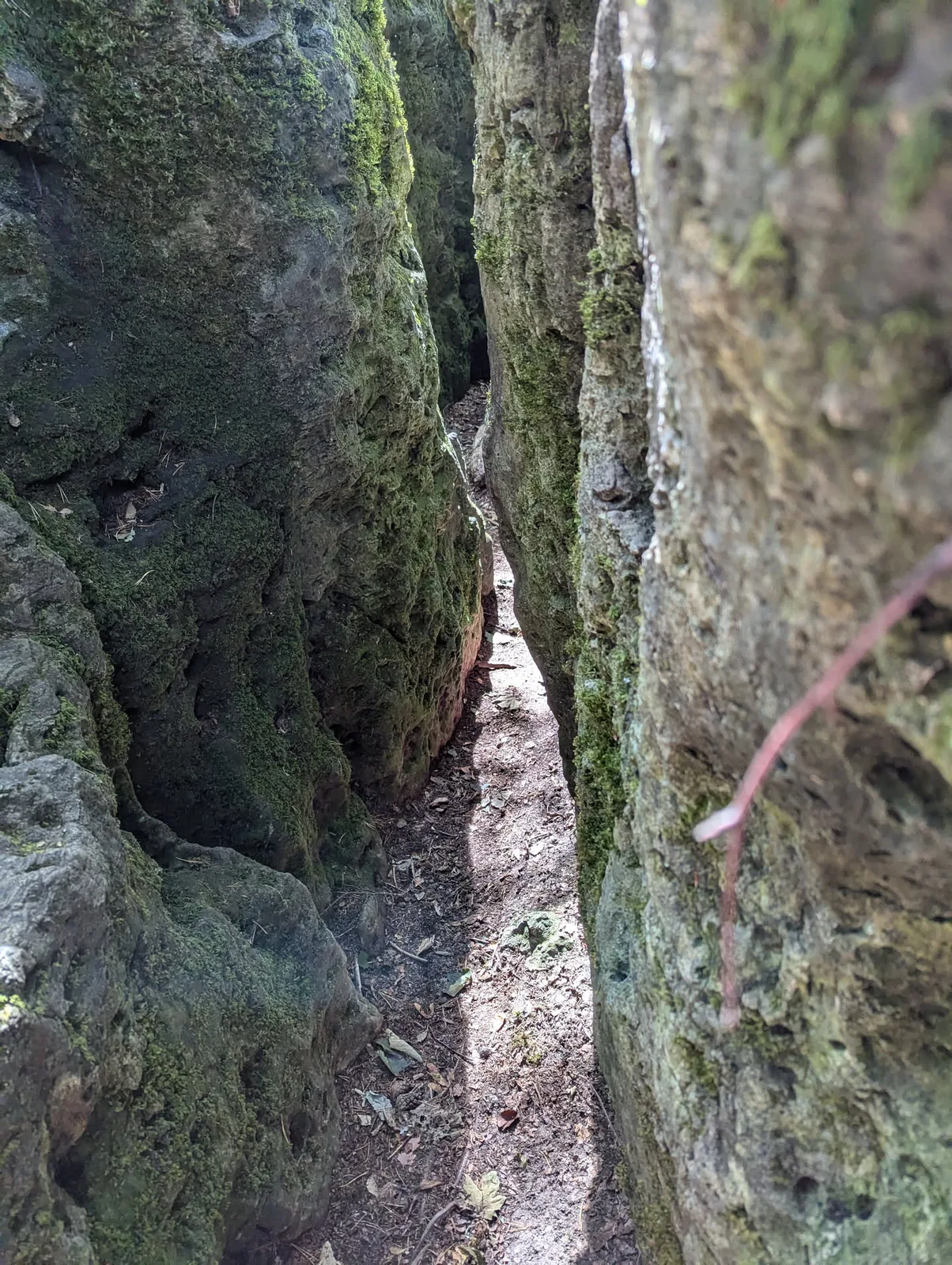
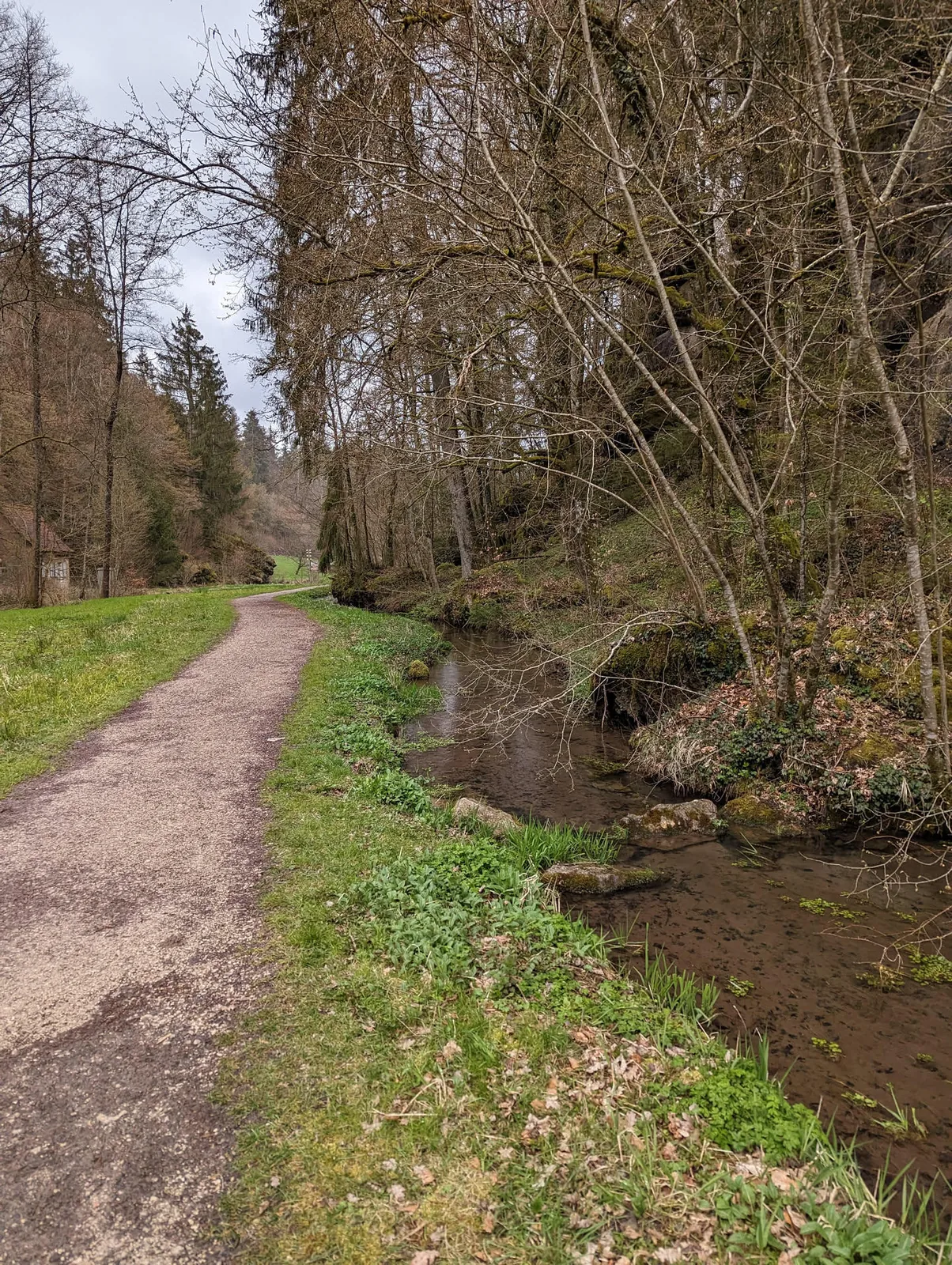
Franconian Switzerland is, above all, one thing: landscape. Within a small area, free-standing rock towers, stalactite caves, narrow river valleys and vast plateaus are all crammed together. Hardly any walk covers more than a few kilometres without the scenery changing completely.
🪨 How this landscape was formed
Around 150 million years ago, this area was a shallow, warm sea. Its sponge reefs turned into solid dolomite rock, whilst the fine silt in between became softer limestone. As the land rose, the water washed away the soft limestone, leaving the hard reef cores behind: the rock spires and rock castles that now tower above the valleys. Beneath the surface, the same water carved out fissures, sinkholes and caves. That is why many valleys no longer carry any water at all; it seeps into the karst and re-emerges elsewhere as a spring.
🗓 Best time to visit
In spring, the dry grasslands on the heights come into bloom; summer belongs to the river valleys and the cool caves; autumn to the clear light on the panoramic mountains. And in winter, when hoarfrost clings to the rocks, you often have the most beautiful trails all to yourself.